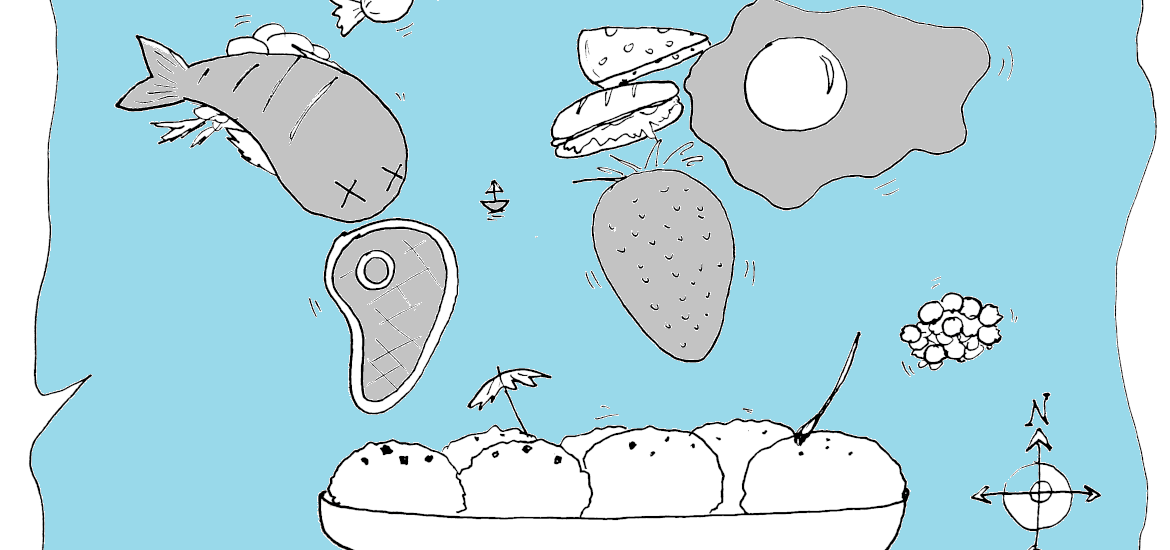
We all know that the food distribution is grossly disproportional on a global scale. But just how much food do we actually need? I am thinking in a purely scientific way – just the calories and nutrients, with no regard to taste and gourmet satisfaction. What is the normal requirement and if there really is enough food for the whole world population. Or if the vegetarian doomsayers are correct and there is not enough arable land to feed everybody if we all turn vegetarian.
Starting data
First let’s see how many calories we need. This is a fairly well established fact – 2000 kcal for women and 2500 kcal for men. For further assessments I will use the average, thai is 2250 kcal per person.

However, this does not mean that you can drink 250 grams of olive oil and you are ok for the day. Olive oil is healthy and this amount has approximately 2250 calories, but this is simply not compatible with good health. Our body needs a mix of carbohydrates, proteins and lipids, together with some micronutrients like vitamins and minerals. Some fiber would also help with better digestion. The amount of calories from carbohydrates, proteins and fats is already well defined and given in ranges.
For our purpose let assume 55% of calories should come from carbohydrates, 30% from fats and 15% from proteins. That makes 310 grams of carbohydrates, 75 grams of fats and 85 grams of proteins per day per person. This makes sense, since my research into protein supplements showed that 1 g of protein per kg is enough for a general population, which is in line with the above values. A thing to note is that most foods already contain a mix of these three macronutrients and we do not need to eat several specific foods to cover everything. Due to this fact, in my assessment I will ignore all the vitamins and minerals and assume you are covered with that from eating all the foodstuff required for covering your carbohydrate, protein and lipid requirements. We are covering basic needs after all.
Basic evaluation
Well, luckily for me, people that I trust have already done just that. As you would expect, the numbers of calories and nutrients produced in the world per person are steadily climbing year after year. In 2024 the World produced 3000 calories, 92 grams of proteins, 89 grams of fat and 457 grams of carbohydrates per person (the last number is calculated by me, from the three numbers mentioned above). This is the total of all agricultural produce, both crops and livestock, as it is noted on the website. I made a quick crosscheck – Germany is not a world known agriculture producer, but they are known for their good record keeping, so this should be fine. In 2024 Germany produced 12 million tonnes of potatoes and 18 million tonnes of wheat. These two crops alone are enough to cover all energy and carbohydrate needs of 83 million Germans and 90% of their protein needs. So the world numbers make some sense. Further, we are looking only at agricultural produce, but there is also fishing and grazing animals like sheep and goats that we are not factoring in. Overall, I believe we can safely say that currently the world is producing enough food for everyone. Theoretically.
The problems
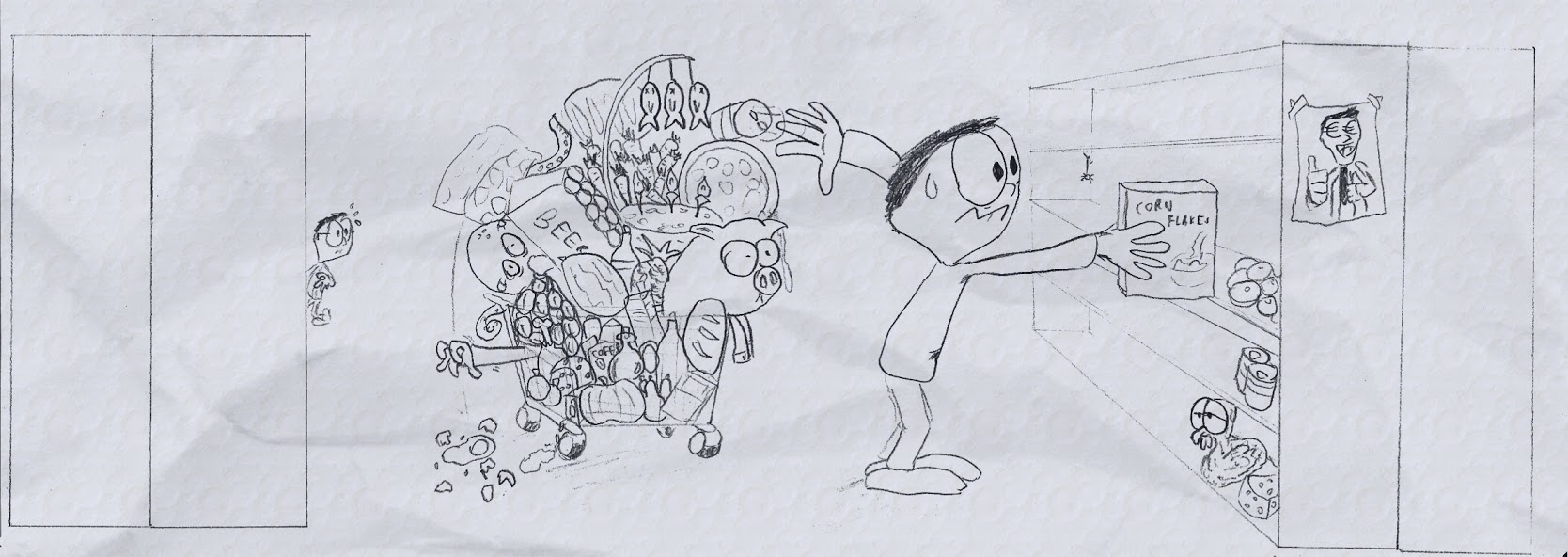
So, despite having enough food for everyone, still a lot of people are hungry. As I said in the beginning, one problem is uneven distribution of the food. There are more, so we will skim over the main ones and potential solutions. This will be a really high level overview, since every single problem is so complex that it requires a separate article.
Distribution
Distribution is the obvious problem, since we all know that some countries produce far more than they need. The logical solution would be to ship the food to the places where it is needed. This is done to some extent, but it has two major obstacles. First, there is a lot of food to be shipped, which requires transport of some kind, which is costly. Secondly, not all food is suitable for transport over long distances. A much better solution is to grow food locally or at least close to the place where it is needed. And there is room for improvement, especially in places where the food production is low – e.g. Africa. For instance, Ghana has increased its food production significantly more compared to its sub-Saharan neighbors, thanks to smart government policies.
Waste
Waste is another huge problem – if you throw away the food, you cannot use it. And we throw away a lot of food – around ⅓ (33%) of all food goes to waste! Out of that amount, around half is thrown away by us, the consumers. So this is the obvious place to start, but we can only hope that our habits change quickly. The low hanging fruit here is the food we throw away because of the expiration date, and this accounts for around 10% of all food waste. We really do need to look at this pragmatically: food that is spoiled or/and can spoil quickly and looks/smells funny (meat, fish, dairy products) is probably destined for waste. On the other hand, we put expiration dates on everything due to regulatory reasons, and this might not always be necessary. For instance imagine our bad luck that 250 million years old himalayan salt that we bought is about to expire. So a rational look at expiration dates might save a lot of food. Another good option to reduce the waste on the side of consumers is to reuse the leftovers. And a proper storage is also helpful in places, where currently there is none – for instance FAO estimates that up to 40% of food produced in Africa is lost between harvest and market due to poor storage conditions.
Animal feed
Another common topic in the food debate is the amount of crops that we use for animal feed. The main question is if this makes sense given that the energy and nutrients we get from animals are much lower compared to the energy and nutrients used for their feed. The statistics of this are very interesting. We use about 45% of habitable land for food production and 80% of this land (i.e. 36% of habitable land) is used for animal feed. As you might imagine, the majority of this land (almost 90%) is used for grazing, which also makes sense. And here lies the partial answer to our initial question: yes, we can keep the grazing animals, since their feed is not suitable for humans. Grazing animals contribute around 10% of world beef and 30% of world sheep and goat, which is not insignificant. As for the animal feed – we certainly do use a lot of agricultural produce for animal feed. But again, the situation here is not black and white – a lot of animal feed is not suitable for human consumption. For instance, grass and crop residues are the most important source of animal feed globally and are not suitable for humans. But, for instance, 11% of grains produced worldwide are used for animal feed. This, in my opinion, could arguably be used for human food since it would not have a huge impact on total animal feed, but it would have a huge impact in terms of food availability for humans. And, as an added bonus, compared to animal produce, grains are more stable in terms of both storing and transport.





This is a really interesting way to look at global food availability. I especially liked the discussion about distribution and food waste, because producing enough food is only part of the problem. The practical examples make the topic much easier to understand.
I honestly feel attacked by the Himalayan salt expiration date observation! I have a jar in my pantry that I’m pretty sure has seen empires rise and fall, yet I still check the label like it’s a ticking time bomb. You make a great point about the logistics of it all, though. It’s wild that we have enough total output to feed everyone but still struggle with the basic human connections needed to get that bread from point A to point B without it ending up in a dumpster or rotting in a warehouse.